Showing posts with label serenity. Show all posts

Wednesday, 21 September 2016

To the Mountains

Searching for heather, looking for firth from fell - temporary roads - awesomeness - home and away - peak-bagging - heather mattress - release the hounds

I don't think of heather as being a particularly Lake District plant. I think of it primarily as Highlands and, if pushed, Peak District. I included heather in the colours for my Dancing on the Fells blanket, but wasn't entirely convinced. I'm obviously wrong here - just look at the Skiddaw massif in August - and need to reprogamme myself. I decided it was time to walk up Skiddaw, partly in search of the heather, partly to see the view of the fell from the firth, partly to walk one of the high fells for the first time: my first Furth.

The radio news show is discussing distractions from taking a hands-free phone call – but what about distractions from seeing a buzzard take off and hover over the field beside the road? The first autumn skein of geese flying in? The mountains on a beautiful early autumn morning? Entering the National Park, the view of the back of Skiddaw causes me to pull off the road just to look at it.

Autumn morning Skiddaw


On the last stretch of the road to the car park, a Temporary Road Surface sign, which I don’t place too much store by. I had forgotten: when I was a child I thought “temporary” meant “bumpy” because in Cumbria, a temporary road surface was a lumpy one. In this case, “temporary road surface” means “not much road surface at all”. It’s obviously a post-Desmond issue – but having experienced some post-storm roads in Africa, that one really ranked up as a strong contender for the worst road surface I’ve ever encountered. And I encountered it too fast, not having interpreted the sign correctly. Swearing followed.

 
Temporary road surface

I assumed that before 9am was early enough to still be able to park , but the parking area was close to full already, noisy and smelling of bacon cooking. The British junior hill-running championships were due to start around 10am. Not only do you need to check the fell weather forecast when planning a trip to the high fells, but also the fell running forecast (and I don’t have a twitter link for that). The marshals have arrived now to set out the course, which is exactly the route I will be taking, as far as Skiddaw Little Man – solitude and serenity will be in short supply today.

Shepherd's memorial

500 metres of the 720 of ascent are in the 3km between the car park and Little Man summit, and getting them out of the way at the start dealt with high fell anxiety - can I do it? Yes, no problem!


Central fells with heatherDerwent water without Keswick

The walk book says: “Little Man is a great lunch spot with awesome views”. My instant response to the word 'awesome' is, eugh, horrible devalued word. And then I realise it's not being used tritely here: if that’s not awesome, what, in England, is? If we don’t now call those views awesome, is that because we’ve seen too many other higher mountains in other countries? Yes, that view is awesome.


I feel a hymn coming on.

O Lord my God! When I in awesome wonder
Consider all the works Thy hand hath made.
... When I look down from lofty mountain grandeur
And hear the beck and feel the gentle breeze:
Then sings my soul, my Saviour God, to Thee:
How great Thou art, how great Thou art!
Then sings my soul, my Saviour God, to Thee:
How great Thou art, how great Thou art!

Yes, I did stand on top of Skiddaw south summit momentarily surrounded by no one and sing part of a hymn out loud. I'm not actively religious these days, but I love the big old hymns. Methodist upbringing.

About 11am, a little later than the forecast had said, low-flying clouds arrive, moisture steaming of the mountain's flanks and forming into small eddying clouds. Along the broad sweep between the south summit at the to summit they sweep up form western flank, cutting off the view. I've encountered this in the Julian Alps but I haven't explored my own back yard to meet it here before.

Inversion over Bassenthwaite lakeWestwards

The final approach to the summit is increasingly crowded as people come up from the other faces. Some are clock-watching; one father and daughter couple have a chat while they catch their breath, ask my to take a photo of them with their hands on the trig point, and hare off in another direction. I don't understand the attraction of peak-bagging. I understand the completist aspect, of course, but not the enjoyment of doing it. I want the time to stop and wonder, not to tick off the next summit. I'm only here today for the curiosity of the high fell and the desire to see the firth from here; really I'd rather be over there in the much quieter, but lower, back o'Skiddaw fells, with the wheatears and the last swallows of summer.

Salehow beck/River CaldewTowards Skiddaw house YH, with heather Salehow beck/River Caldew

The clouds are still largely obscuring my village, so I hide out in one of the summit sheepfolds away from the crowds, eat my lunch and wait for it to lift.
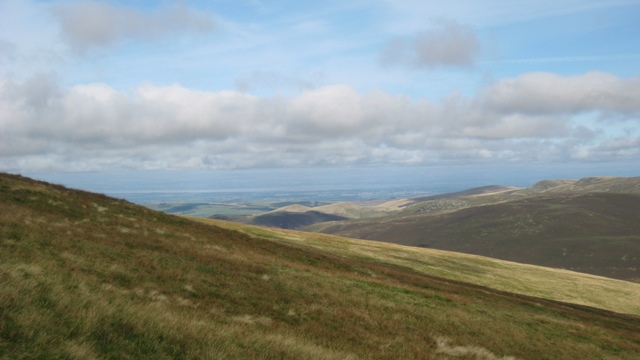

Firth from Fell over Skiddaw flankFirth from Fell over Skiddaw north


Firth from Fell with Blencathra

As I pass Little Man from below on the return leg, the unmistakeable sound of a helicopter. In King's Cross there are police helicopters every night – that's situation normal. And for the year and a bit before the migration the London hospital I worked in had a helipad on the roof - a helicopter is bad news but situation normal. In Cumbria – bad news, not situation normal. The air ambulance circles once then lands carefully just over the saddle behind Little Man, and it’s the best part of an hour before it takes off again.

Lonscale Fell is much more deserted than the Skiddaws, and the day is getting hotter. After soggy bog on the way, what looks like bog around the east summit turns out to be dry and cushiony - very comfortable for September sunbathing. As is the heather mattress a little further down - mostly finished flowering, but springy and comfortable. Although the 45 degree angle might make sleep tricky.

 
Derwent water with bog poolLonely fells


Glimpsing Thirlmere over heatherbed

Across the valley, there are ten parascenders hanging out. From my heather bed I'm reminded of a former colleague's story. On a countryside adventure with a partner, they decided to take advantage of the solitude (and no doubt the heather bed) to get intimate. They didn't notice the parascenders - but the parascenders noticed them. As they found out in the pub that evening. Blushes.

After a steep barefoot descent, I'm surprised to see a huge number of cars parked - they seem to have overflowed the designated parking area and parked in a field, surprisingly. The path swings back a bit to cross Whit beck, taking the cars out of view. After crossing the beck, I'm approaching the corner which will give on to the car park when I suddenly hear a galloping sound. A moment later, a pack of hounds turns the corner towards me at full tilt. As a child I read that if confronted by a stampede of elephant, the correct procedure is to stand still pretending to be a tree (I was never sure whether I should stick my arms out or not) and the short-sighted elephants would just go round you. This also works with Lakeland foxhounds.


Note: Six hours. Baseline 5hrs for 13km plus 700m of ascent; add half an hour waiting for the cloud to lift to see the firth and half an hour sunbathing in the heather.

Tuesday, 6 September 2016

Of bikes and bends

ToB2016 - TdF2012 - Milk Race - Howgills - driving - that roundabout - the race - driving again - remembering to stop, remembering to go out every day, just to see and smile

Today was the Tour of Britain 2016 in Cumbria, with a route taking in many of the places affected by the winter floods. Presumably a stage was already allocated to Cumbria before the floods (given the geography, we've got to be odds-on favourites every year to have a stage), but perhaps the details were planned out later. My plan was to see it in two places, Carlisle and Ambleside, and if I got to Ambleside in good time for 13:00, to help out on the Struggle. Not helped by a tyre blowout last night, my ETA was 13:05.

Driving into Carlisle and suddenly seeing team buses outside Tullie House and Radio Cumbria suddenly makes it feel real. I've seen them in Paris and London, but not on my everyday streets. I've seen a mountain stage of the Vuelta in the Sierra Nevada, I've seen finishes in Paris, London and Ipswich, but this is the first time I've seen a stage start.


Team buses at Radio Cumbria!

I used to be an armchair cycling nerd, keeping performance spreadsheets for Tour positions. I watched through most of the drug years then switched off when the disqualifications simply became too much and the races became a farce. I missed the rise of British cycling and the fall of Lance Armstrong.

Now I don't recognise most of the riders - some of the names are familiar from the Tour de France, some of the teams have been around in one form or another for years, but I don't recognise the faces - so I can be interested in the process of signing on and shuttling between team bus and cars and the public space without knowing who they all are. Yes Cav and Wiggo did pass me at almost touching distance and no, I didn't photograph, or touch, them. Here they are in Paris 2012 instead:


Team Sky, Paris 2012 Team Sky, Paris 2012
 
TdF Publicity Caravan TdF Publicity Caravan


Met my colleagues on the millennium bridge over Castle Way to watch the neutralised race pass under us in both directions. The leadout club riders from Border City Wheelers and Watchtree have already peeled off, probably at the Crescent, and there's no 20km, 160 vehicle-long caravane publicitaire sadly - so it's a lot of motorcycle outriders (many happy to wave at the crowds), a commissaires's car, the peloton and then a long, long string of race cars and one ambulance. (And in Ambleside, an ice-cream van.)

 
Commissaires and outriders Peloton

Peloton Team cars


And then off to drive down the motorway to Kendal and then Ambleside to avoid road closures. All the team buses have been directed down Warwick Road and I'm shortly in front of the Team Wiggins motorhomes. (Motorhomes. Not buses.)

I pass Penrith before the riders do, as they've gone for a slow schedule. They'll go past my old house, just like the Milk Race used to every two years when we were kids. Then it was a routine and I don't remember a sense of occasion like we have today... but I was young and it wasn't a sport that was followed in our household then (football, rugby, cricket...). A near-neighbour who was a local character is interviewed on Radio Cumbria - still is a local character, 35 years on.

The Wiggo motorhomes reappear in my rearview mirror going up Shap, and I find myself between trucks and vans, allowing them to overtake before ignoring their instructions and turning off at junction 39. I continue to 38. My mum worked in Tebay, and I used to get the National Express coaches to drop me off at the truck stop here so I could get a lift home rather than going through to Carlisle.

I've never been on the A685 before, let alone driven it. Like Stuart Maconie in August's Cumbria Life, the Howgills just here are the definitive sight of home for me. Ten years or more ago, the carpenter was doing his degree dissertation about landscape and memory, collecting data online from friends and their friends, about favourite landscapes. Mine was always this point where the Howgills and Shap Fell (now the extended National Parks) come together over the Lune gorge south of Tebay, blowing kisses over the motorway and railway, because then I knew I was home, whether I got off at Tebay, Penrith or Carlisle. The carpenter, bringing me back for good this summer, knew exactly when to welcome me home.

I made good time on the motorway, but I can't see making it to Ambleside in time for my volunteering slot - but I'm having a great day anyway, and enjoying driving an unfamiliar route. After I pass through Kendal in the opposite direction to that the riders will be taking later, I remember why I haven't driven round here before: here's the roundabout where I failed my first driving test, my only test in Cumbria. When I finally passed, I would drive up from Brighton for a few years, but barely moved the car once it was parked outside my parents' house. The last few weeks, driving roads both familiar and new to me, has been more fun than I expected. The only road numbers I knew before were M6, A6, A66 (and I've lived on two of those) - now I'm learning the full set of A59Xs and more.

I get to the university campus in Ambleside at 12:59, and park up at 13:05. I'm impressed at the accuracy of my ETA, but sorry to lose out on volunteering. Still, I can watch the big screen coverage and see the race as they enter the Struggle, so it's not all bad.


Breakaway before the Struggle Cav leads the main group to the Struggle
Speed  


Back home via the A591, familiar as far as the turning to St John's in the Vale, so although I have been on the stretch to Keswick (on a bus, I think), it's much less familiar. The cloud lifts and the light over Catbells drags my eyes away from the road. We are lucky to live here and I have never truly appreciated it before. I turned off to Applethwaite and took time out just to see the view. What I need to keep learning is to take time every day to go out - to the firth, to the fell; to the sea, to the river, to the lake - even when the weather is bad, just go out even for a few minutes. Ten minutes on the marsh last night (even though I fell into the mud and punctured the tyre) left me happier than I had been all day.

Central Fells from Applethwaite


See the mountains and smile.

Wednesday, 24 August 2016

Everyday serenity

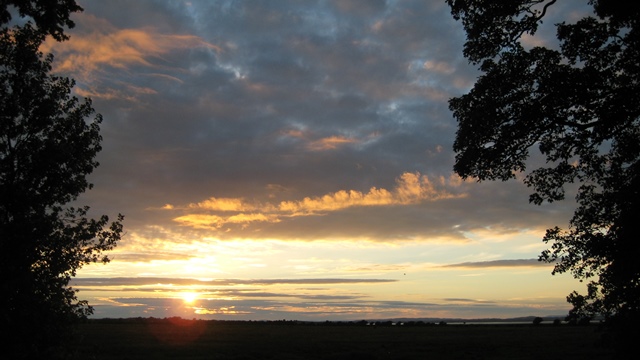
#SolwaySunset - #Vegart

Tonight I spent more than an hour watering the polytunnel, pulling up nettles and photographing the produce. And squealing when I narrowly avoided standing on the hedgehog. All slowed down, and better than doing the ironing.


When I'd done, it was sunset. Cracking view, as the neighbour said. This is the view from my brother-in-law's front drive. This is what he has, every day of the year (it rains sometimes - but it's still a great view then, just moodier).

Sunday, 21 August 2016

On slowing down

Poster girl - kayaking - allotmenteering

I imagine it's a common thought that moving from London to country life means slowing down, that city life is busy, hectic and full and that country life is slower, gentler, less busy. There must be some truth in that - travel, transport and associated behaviours are different - but mostly, each to his or her own. Busy people are busy people. People have advocated to me in the past that I should slow down, but it's not really me. I fidget.

I had a lovely long chat with another returner on Tuesday. I’m going to be a case study for the award-winning recruitment programme that brought me home, and we had a lot to talk about. In amongst it, all the many things I want to do outside of work, from my crochet, quilting and dressmaking to preserving, brewing and smoking, from kayaking and walking to WI and other community activity. This is not slowing down! - even though I have 2-3 hours more in the evenings than three months ago, I’m still going to bed well after midnight (in fairness, Olympic coverage doesn’t help with that right now). But when we discussed driving, I observed that my driving style has relaxed – after being hooted at three times in the first fortnight for driving London-style and cutting people up, I have slowed down and become more in tune with local ways.

I had resolved to go kayaking again once I moved back home. Having said it publicly in my Cumbrian poster girl interview, I had to follow through, and after a month of procrastinating (rainy evenings and other things going on) I finally went out on the Eden in Carlisle on a fabulous warm sunny evening this week. Did it all come back? Not exactly – I hadn’t really been taught in a systematic BCU way, so I don’t know the words and I don’t know how to 'cut in' and out and I really don’t know how to do that thing of moving my weight to make the boat lean. But the group goes on river trips – three days canoeing the Spey and camping sounds fantastic - so I’ll certainly persist in order to do that, and hope the carpenter is able to join in too, eventually. And I always wanted to kayak the length of the Eden - may yet happen.

I have temporary custody of my brother in law’s polytunnel while he’s on holiday. In the hamlet at the edge of our parish, it’s bigger than an allotment, but – being covered – needs watering every couple of days. The first day is after kayaking; we got off the water shortly before 8pm, and by the time I've got the boat back to the boathouse, changed out of my wet shorts and got back to the car, the sun was well on the way to set. With no light in the polytunnel, I’m clockwatching – more than half an hour to water all the beds.


Tuesday Criffel, Thursday

On Thursday, realising the rain was coming, I decided to strim the field that passes for a lawn at present – more than a month since it was last cut. It takes at least two battery charges of the strimmer to get it all done, so I did the first half before going allotmenteering while the battery recharged. Earlier than Tuesday, the sun was still setting as I got there, and I pulled off the road to look at Criffel in the golden glow below the cloudline.

Yesterday the rain had set in, but there was some late afternoon serenity in the polytunnel, sheltered from the Solway wind and rain and the tidal flood warning outside, slowing down and watering all the beds carefully. Do I have the patience to do this all the time? If I planted the seeds would I have the patience to nurture them? This afternoon I’ll come back and do some weeding. Although I was invited to harvest things, I’ve only taken three figs – I feel guilty about taking stuff unless I work harder for them.

Driving out on the marsh road, looking bleak yesterday with fog over the horizons hiding the mountains of Dumfriesshire. When I’d done the watering, the cloud had lifted out west, revealing the golden hour-before-sunset sun and the mountains across the water. I parked up in my new favourite edge of the marsh spot to take it in. Twitter suggests we have the best sunsets in the country on the Solway (but I bet everyone on the west says that about their bit) – but why no #SolwaySunset tags?

When I was a child we had a neighbour for a while who turned his half of the huge garden (that now has half a dozen houses on it) into an allotment, but in the end couldn't cope with the small Penrith skies and had to return to the flatlands of his home. If only he'd found the Solway Plain - big skies, great sunsets, mountain fringes.

Friday, 22 July 2016

Seeking serenity at the tarn of the immortal fish

Seeking serenity – self-reliance on the back-roads – rose-tinted spectacles – the power of nature – solitude – of walks taken before – bilberrying and fashionable foraging– the path less taken – of walks not yet taken and not to be taken – serenity and solitude – of walks taken without me


A friend made a remark about seeking serenity in mountains; after a month of living in Cumbria I’d been cultivating #notjustlakes by spending time on my home patch, the Solway plain, but serenity seemed like a good idea. One of my walk books suggested that Bowscale Tarn is an “oasis of solitude and serenity” at 400m and in the fells that are nearest to the firth. Further investigation revealed the added bonus of a pair of immortal fish, possibly talking (Ermengarde of Keswick, Wordsworth and social media in general).

I’m determined to get to know the myriad back roads across the plain, without a satnav (which I imagine would want to send me via the big roads anyway). Reading an OS map whilst driving being somewhat inadvisable, I’m going to have to learn the roads – and pull over periodically when I mess up. I do better this time than last time (get further before going wrong due to the absence of signposts in Thursby) and the views of the northern fells together with hedgerows of meadowsweet and foxgloves make for a great drive – an hour to drive 30 miles. It’s only later that I realise that hedgerows are a largely non-Lake-District phenomenon, and that drystone walls are not county-wide.

The foxgloves in the bracken are very striking and I don’t remember them going quite high up the fells when I was a child. I’m reminded of the nitrogenating lupins in south Iceland. Suddenly realise I have pink tinted sunglasses on, and the foxgloves, rosebay and grasses are not quite so bright in reality as they appear to me.
Foxgloves, bracken, heatherFoxgloves
HawthornHawthorn through pink tinted glasses

With or without pink tints, it seems the colours for my crochet fell blanket are good – I’m happy that I’ve got a good range of greens, slate grey and sky/tarn/lake blue, together with autumn bracken brown. And saw enough heather to justify its inclusion in the colour scheme.

Finally leaving the Mungrisedale road, I set off up what promises to be an easy riverside track alongside the Glenderamakin river. Until it disappears. A chunk of path 2-3m wide and 15-20m long has disappeared. Seven months on it’s a striking illustration of the December floods. And the priority for fixing roads and paths has been the places where the most people go, not places like this (and it’s not obvious, given the gradient and the bogginess, where a replacement path would go). The Glenderamakin is a river, not a beck, certainly, some 4km long at this point– but not a big river. If this little river can do that much damage, probably in one weekend, it puts into context what glaciers could do over centuries. This is the biggest missing stretch, but not the only one, and the bridge over Bulfell beck is detached from the path at both ends. There are stretches that are recovering from collapses in previous years and also stretches which have collapsed much more recently, with the detached part covered in fresh bracken. The ground is so sodden it’s easy to imagine more collapses and who knows how it will be by the winter.

The path that isn'tBoulders
Old collapseNew collapse


New mini cairns mark a shoreline path and imply a crossing place – but there aren’t stepping stones and the jump is further than I’m comfortable with. The river is too deep to confidently walk up, so a scramble along the sloppy muddy bank is in order. I’m glad I’m not wearing closed boots – open sided shoes have more flexible soles and it’s easy to wash the inevitable mud layer off. I’m also glad not to be accompanied by a man recovering from an achilles rupture – that would be the end of the walk right there.

The ‘sometimes muddy’ path (i.e. an unculverted beck in the middle of summer) continues on and by the time we reach Bannerdale beck there are two couples and me queueing to cross. I smile and paddle through, hoping to get a headstart on them. The older couple seem a little worn out by the whole effort and I never see them again. The young couple are delayed at the ford for a while but eventually take the same route as me, so after the first period of ascent, I pause awhile and let them pass. This is about solitude, after all. At the bottom of the crags I find a sitting stone set back into the hill giving me a great place to stop, positioned in such a way as not to be able to see or hear anyone else on the mountain, and admire the view down Mungrisedale over to the Pennines.

I’m reminded of many other walks – in the Faeroes, dodging the oystercatcher nests; in Iceland when I had the revelation that their landscape words are ours, and their landscapes are ours a few thousand years ago; in Slovenia and Estonia for greenness and solitude; and in the Jordanian desert where I followed the camel train on foot so that I could let them go round a corner of rock and leave me alone in the desert – and later when everyone sat in rock niches and I had my own niche and could sit far enough back to see no one and play desert music in my headphones (ok wrong desert, but it was one for my desert island (ahem) discs list – as is Manchester Rambler, which I’m singing in my head today).

Bannerdale looks like a cirque without a tarn: certainly glacial, but no moraine to hold water back, and the valley does seem to slope continuously if gently. But see how wet that valley floor is – dark green bog patches halfway up the sides – and this is July – a fairly wet July, but July nonetheless.
BannerdaleBoggy bottom

When I think they’ve had enough time to get away, I set off again – only to see they’re not that far away and must have taken a break too. But then I see the bilberry leaves, and after some searching, some berries. At which point I have realised I have again forgotten to bring a foraging receptacle – unforgiveable given that most walks involve picking something. Eventually I realise that I shoved the raincoat into a fresh food-bag, and the problem is solved. Collecting berries on a 45 degree slope just adds an extra level of adventure to an ascent. The fact that I have not taken the right hand path advocated by the walk book, but the more difficult left hand route (in fairness, it looked easier at the bottom, and there were more bilberries on the left), makes me think again that it’s fortunate that the man with the broken achilles is not with me today. Looking down from near the top, I can safely say I would not do this route in reverse. I cannot see where I came up and it is alarmingly steep. Engrossed in my bilberries, I’m passed by someone descending the right hand path – I only see him when he’s ten metres below me, and he never sees me at all.

At the top, the view opens to the crowded summits of Blencathra and Skiddaw – there are more people on Blencathra’s summit than on my route all day. The path less taken.

Skiddaw with bog cotton

Taking a break at the summit cairn to admire the 360 degree mountains – and the sight of my firthland home village – I get to thinking again of walks taken, of walks not taken yet and walks that may never be taken. One of my new colleagues has this week judged that I really am a local (yes! Not an offcomer!) when I relate my pedigree, and I think of the walks taken with and without grandparents, the pictures they had, and their enjoyment of these places (or rather, the southern and western fells). And as we all get older, will we do the same walks in future? Will I ever do Sharp Edge or will I not find a companion willing or able? My cousins do the high fells of the west; I never have. But I suspect I would delay too much for photos and foraging, so maybe I can never do those walks with them?

The route drops over Tarn Crags – “an obvious path” – indeed, but not one I can walk down, and I have goat-like balance – I take sections at a crouch. Whilst picking more bilberries. No wonder foraged food is for top quality restaurants, the effort involved in collecting bilberries is uneconomical otherwise. My additional hour en route has produced 120 grams of bilberries – enough to have a few with my garden redcurrants and raspberries for tea, and the rest into a small bottle of gin for some English borovnicke rakija – of which I appear to have four bottles, two homemade by me with Lakeland berries collected by my dad previously. And not yet tasted!

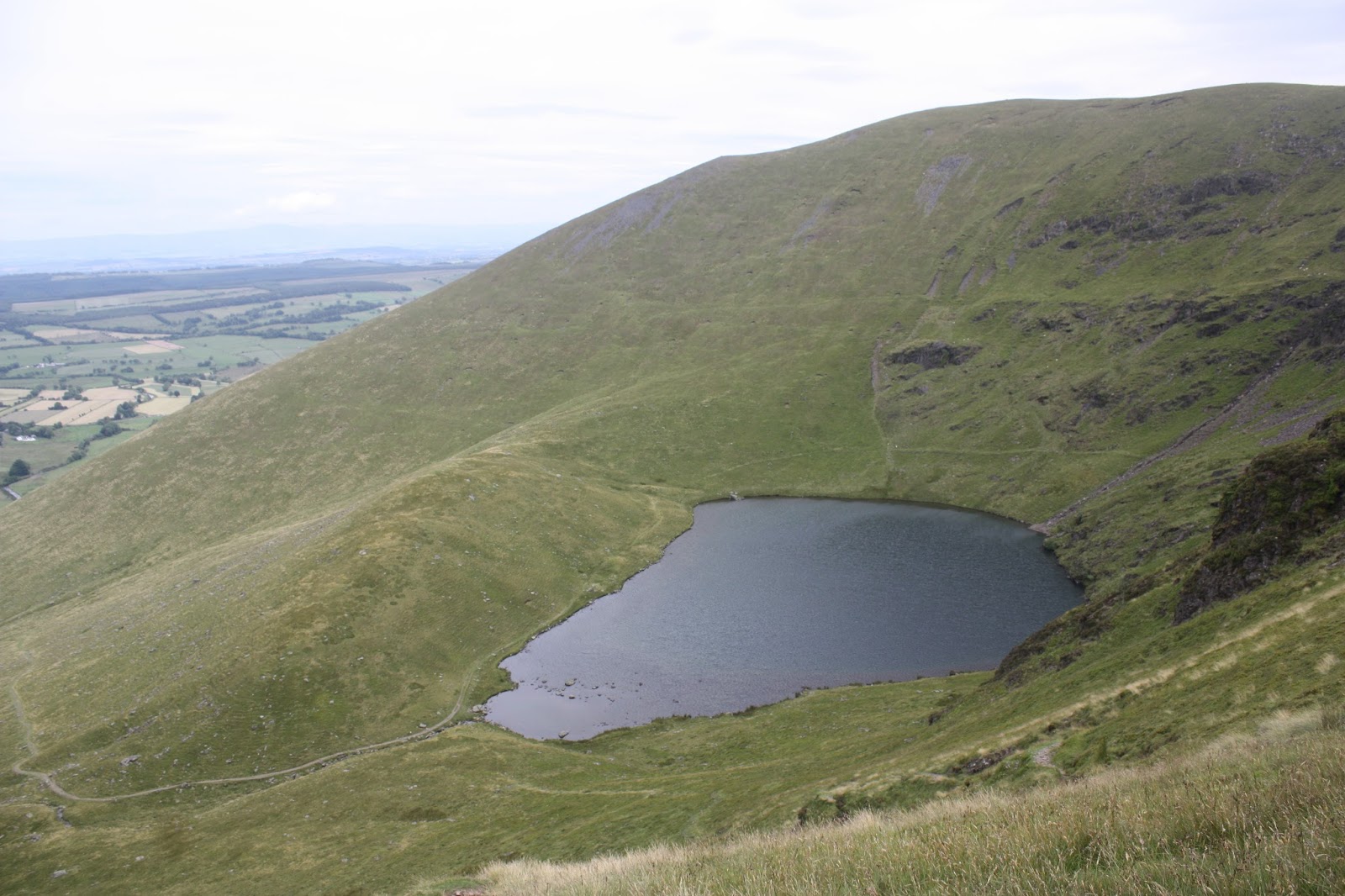
The tarn is a teardrop (tjorn– small lake or teardrop) or peardrop which is blue in its depths. The circular part is visibly deep, apparently 15+ metres, or a 5-storey house. And it has trout, and two immortal, possibly talking, fish. Sitting on a rock in the shallow end, in the manner of the little mermaid, I see no fish, but I have an embroidery design in mind to illustrate the tarn and its legends. And (if you discount the evening dog walkers) it is a serene and isolated place. I had 15 minutes alone on my rock to observe the surprisingly big waves coming from cragside to tarnmouth.

Bowscale tarnFrom the fells to the firth


The path down is busier, with wheatears and juvenile swallows, and sheep, as well as the dog-walkers.

Ewe looking at me?Mosedale, Caldew, Carrock


In the valley, the River Caldew, already sizeable – this is what went on to flood Carlisle in 2015 and 2005. Over there, Carrock fell; I remember a childhood picnic at the bottom, off the road I drove along earlier, and my dad leaving mum, brother and me while he went to climb the fell. He was in his twenties and our legs were too short for fell walking. That didn’t happen often.


Note: Five and a half hours. Baseline 3.75hrs for 10km plus 500m of ascent; add an hour for bilberries and another for photos, reflections and contending with absent paths